
July 15, 2024
How Can You Become a Successful Mental Health Nurse in Australia?
by Antony Thejewel
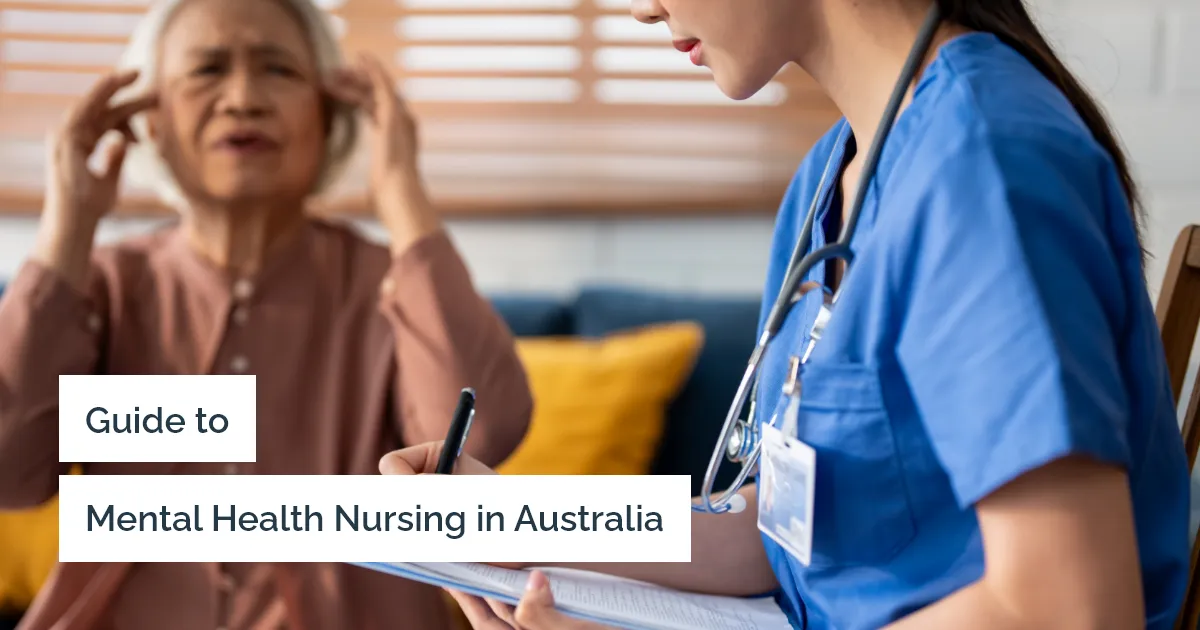
There is an urgent need for skilled Psychiatric Mental Health Nursing practitioners in Australia. The Australian Institute of Health and Welfare (AIHW) estimates show 43.7 per cent of Australians aged 16-85 have experienced a mental disorder, signalling a shared national issue.
As more Australians become aware of the value of mental health, Registered Mental Health Nurses become essential members of the healthcare community. The need for mental health specialists has increased as a result of the mainstream media's normalisation of health care conditions like depression and PTSD. This is an excellent opportunity for anyone who is thinking about pursuing a career in mental health nursing.
The field of a mental health professional is a demanding but ultimately significant and rewarding. In addition to working with a distinct set of difficult illnesses and disorders like anxiety, depression, eating disorders, personality disorders, addiction, etc, nurses who pursue this specialisation get to significantly improve the quality of life for both their patients and the community. You will be in charge of determining the requirements of your clients, connecting them with social or community resources, and offering them consolation, assurance, and encouragement.
Establishing a career in mental health support work does require certain qualification, here's where you can start:
Laying the groundwork (complete an undergraduate degree)
You need an undergraduate degree in nursing. Obtaining this introductory degree can equip you with foundational skills required for a more advanced qualification like master's degree which will enable you to operate in more complex environments. Bachelor of Nursing is a 3-year university degree that qualifies you to become a Registered Nurses (RN) in Australia. This is a basic requirement by law as mental health nurses still need to be qualified nurses before they specialise. Keep in mind that some bachelor's degrees may offer a specialisation in mental health nursing, whereas others may require that it be studied at a postgraduate level depending on the university.
Alternative: If you don't have a bachelor's degree, your only other choice is to work in mental health nursing as an enrolled nurse (EN)
Registration (Become a registered nurse)
After receiving your bachelor's degree, the next step is to apply to the Nursing and Midwifery Board of Australia to practice as a registered nurse.
Gaining experience in the in the mental health field
Once you are registered nurse, you will be allowed to work in a mental health setting but not yet as a mental health nurse as you have to gain experience in the mental health field. Thus, becoming the gateway to studying mental health nursing at a postgraduate level. Look for internships and volunteer work to increase your chances for the future.
Specialisation (Complete a postgraduate degree specialising in mental health nursing)
To officially qualify as a mental health nurse, you need an accredited Graduate Diploma in Mental Health Nursing or Master in Mental Health Nursing.
Apply for credentials
ACMHN credentials is the only consistent standard for recognition of specialist mental health nurses in Australia. After finishing the postgraduate course, you are eligible to apply for the ACMHN Credentials, since you are a Registered Nurse and hold a recognised specialist mental health nursing qualification in addition to having experience in the mental health field.
There are two other points to consider to be eligible to apply for jobs in the mental health field
First, you should have work experience of at least 12 months since gaining your qualification or have 3+ years' experience as an RN working in mental health
Second, you should have support from two professional referees.
Start applying for jobs
Once you have obtained your qualifications and received your ACMNH accreditation, you will have a wide range of jobs available to you. You can now work as a fully qualified mental health nurse. A strong resume should highlight all of your employment experience, volunteer work, and educational background. You can gain work as a registered nurse working in mental health, or as a coordinator, case worker, liaison clinician and health services manager among others.
In conclusion, hope this blog has given you enough information on how to become a mental health nurse in Australia. Contact us at MWT Education Consultancy for more information.

Written by
Antony Thejewel
ENQUIRE NOW
September 22, 2026
Study in Australia in 2026–2027
Australia has confirmed a National Planning Level of 295,000 new overseas student commencements for 2027, maintaining the same level as 2026. The announcement reinforces Australia’s continued commitment to international education while managing student growth through a structured system.
September 11, 2026
Why Clinical Communication is a Core Nursing Skill in Australia
Explore why clinical communication is essential in Australian nursing and how it supports patient safety, clinical care, teamwork, and effective communication in healthcare settings.
June 24, 2026
Complete Guide To Arriving In Canada As An International Student
This guide helps international students prepare for their arrival in Canada by explaining the CBSA inspection process, required documents, common border questions, and how to answer them confidently.
June 22, 2026
Understanding the AHPRA Self-Check
Building a nursing career abroad offers opportunities for growth, international exposure, and professional development. Australia is a popular choice due to its regulated healthcare system and high professional standards, attracting many internationally qualified nurses seeking to practise as Registered Nurses (RNs).
June 18, 2026
Why Eligible Nurses Still Miss Opportunities
Meeting Australia’s nursing eligibility requirements is a major achievement, but it does not guarantee immediate progress. Learn why the registration journey often pauses here and what you can do to keep your plans moving forward.
May 26, 2026
Nurses Stepping into International Nursing
Becoming an internationally registered nurse is a major achievement, but succeeding within a global healthcare system requires far more than clinical ability alone. This blog explores how communication, workplace etiquette, adaptability, teamwork, and professional conduct shape the reputation of international nurses working abroad.
April 30, 2026
Is Your GNM Qualification Enough for a Nursing Career in Australia
Struggling to understand why your GNM qualification does not meet Australian nursing registration standards? Find out why this qualification gap exists and how the GCAN program provides the exact bridge to your Australian career.
April 30, 2026
AHPRA’s Revised English Test Scores for 2026
With AHPRA’s 2026 English language score updates now officially in effect, internationally qualified nurses must adapt to a revised assessment structure. While the basic proficiency standard remains unchanged, specific section scores for tests like the PTE, OET, and Cambridge C1 have been recalibrated. Read MWT Education Consultancy's expert breakdown to discover the exact numerical changes and learn how this new scoring structure impacts your registration timeline.
January 29, 2026
Nursing Careers Abroad 2026
Discover why nurses are increasingly pursuing overseas careers for global exposure, advanced skills, and long-term professional growth.
November 03, 2025
Study Nursing in Australia: The Best Time to Become a Registered Nurse
Dreaming of a nursing career in Australia? Explore the best time to start your studies, registration steps, and career prospects for international students.